Portfolio Case Study

Shmøergh
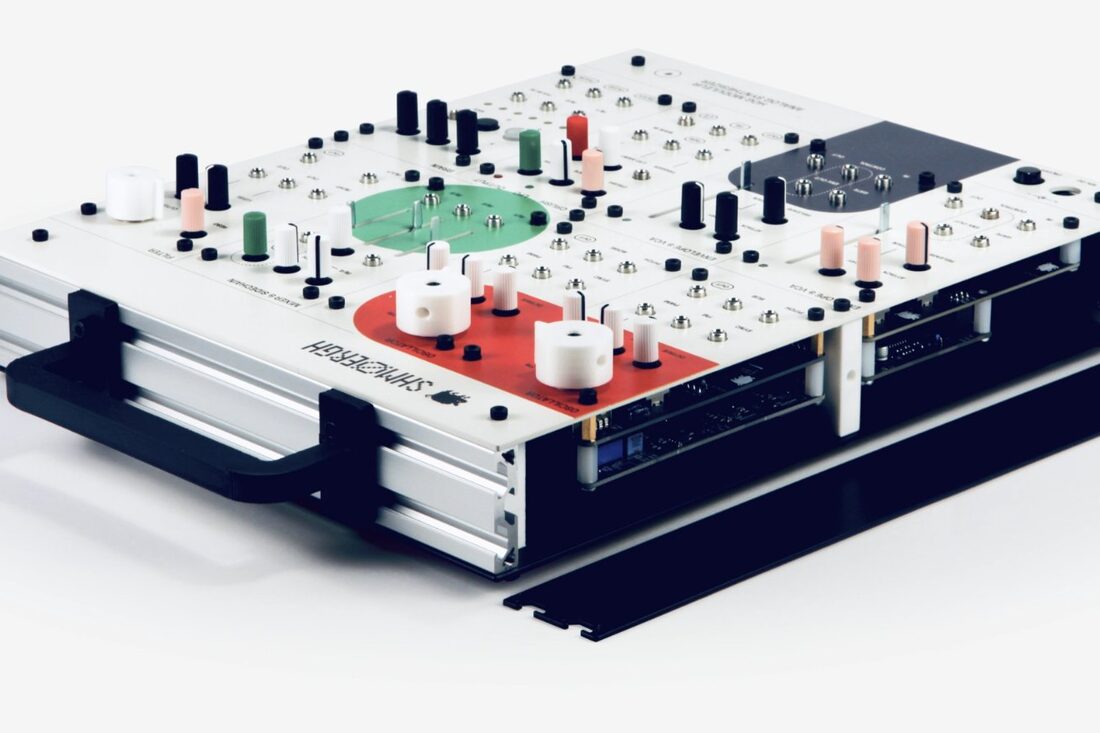
Moduleur

Role Product Contributor & First Build
Discovery & Problem Framing Usability Testing Assumption Testing Outcome Mapping

Validation is not the same as viability.

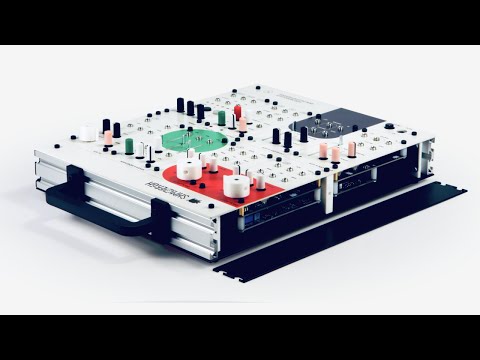
The Shmøergh Moduleur is an open-source analog synthesiser designed and built in Hungary. It launched as an MVP — a single YouTube video — and the response was immediate. More than 2,200 people joined the waitlist. The community understood exactly what Shmøergh was doing: honest design, open schematics, no mass-production pretence.

Demand proved the concept, not the product. A waitlist struggles to convert if the build experience breaks down in the hands of a stranger. The gap between a working prototype and a buildable, global DIY product was the real problem to solve.

Build it yourself. Find out what breaks.

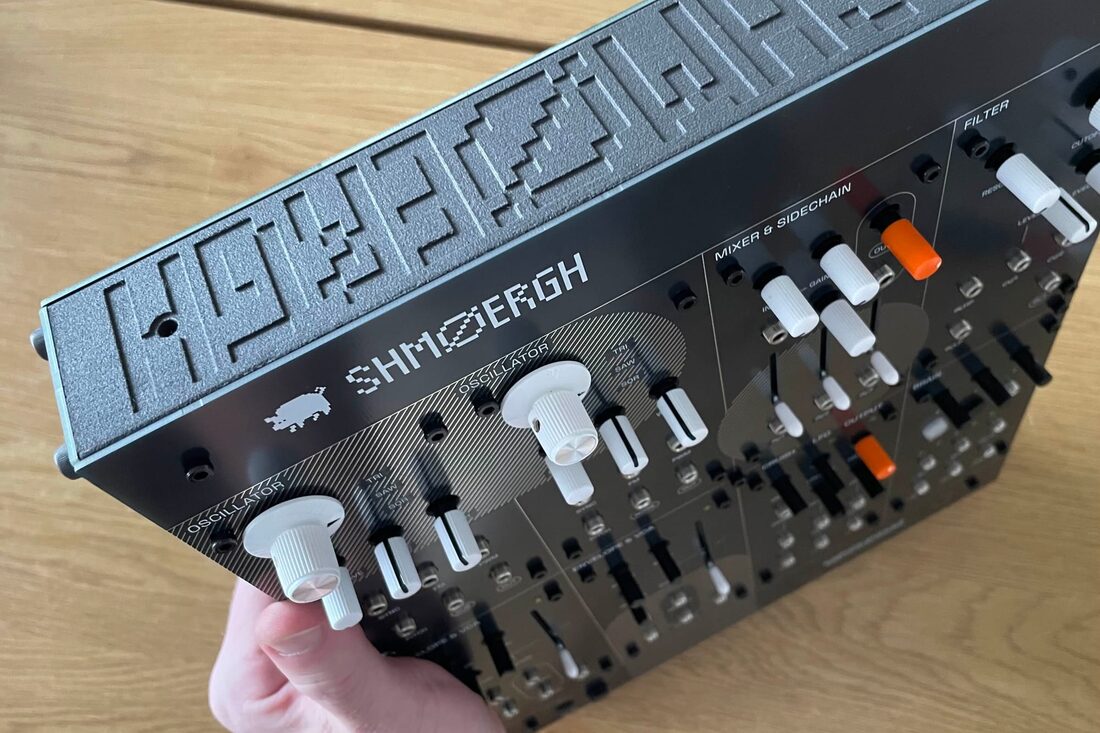
I came to the project as an early adopter — saw the launch video, understood what it was trying to be, and reached out. What followed was an ongoing collaboration with the Shmøergh team throughout an end-to-end build of the first-ever DIY unit.

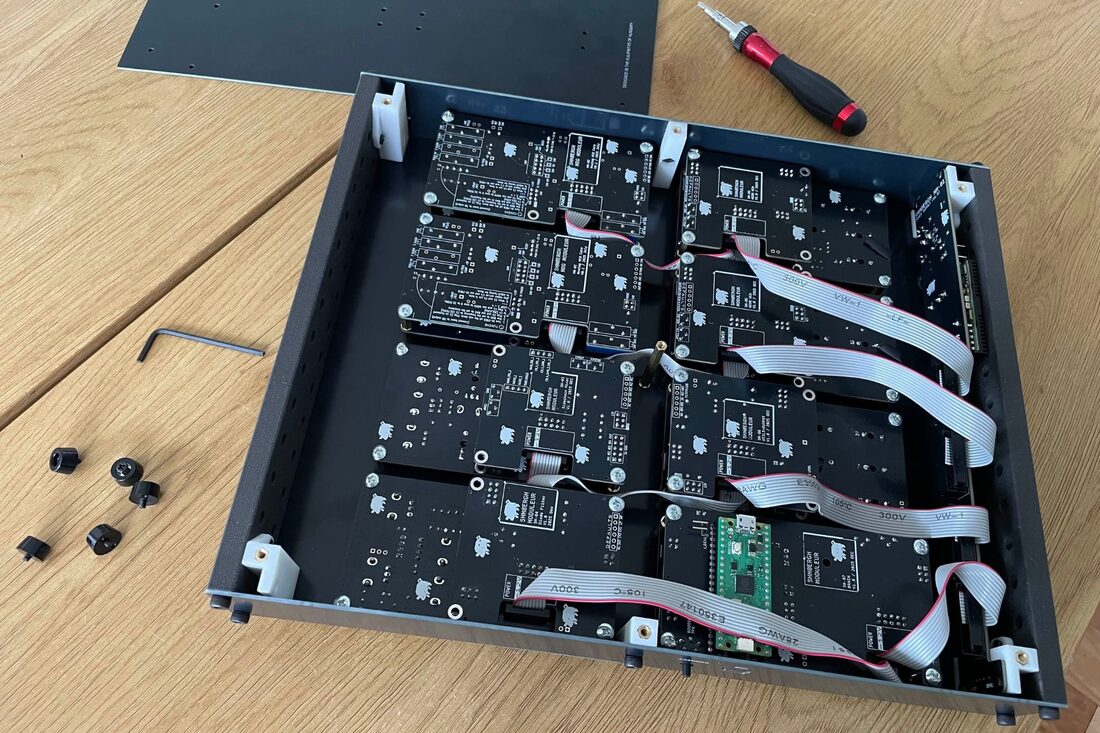
This wasn't a document review. It was real-world stress testing: sourcing components, following the build guide cold, hitting edge cases the team hadn't anticipated, and feeding every friction point back in real time. Circuit queries, parts substitutions, ambiguous documentation — all surfaced through doing, not theorising.

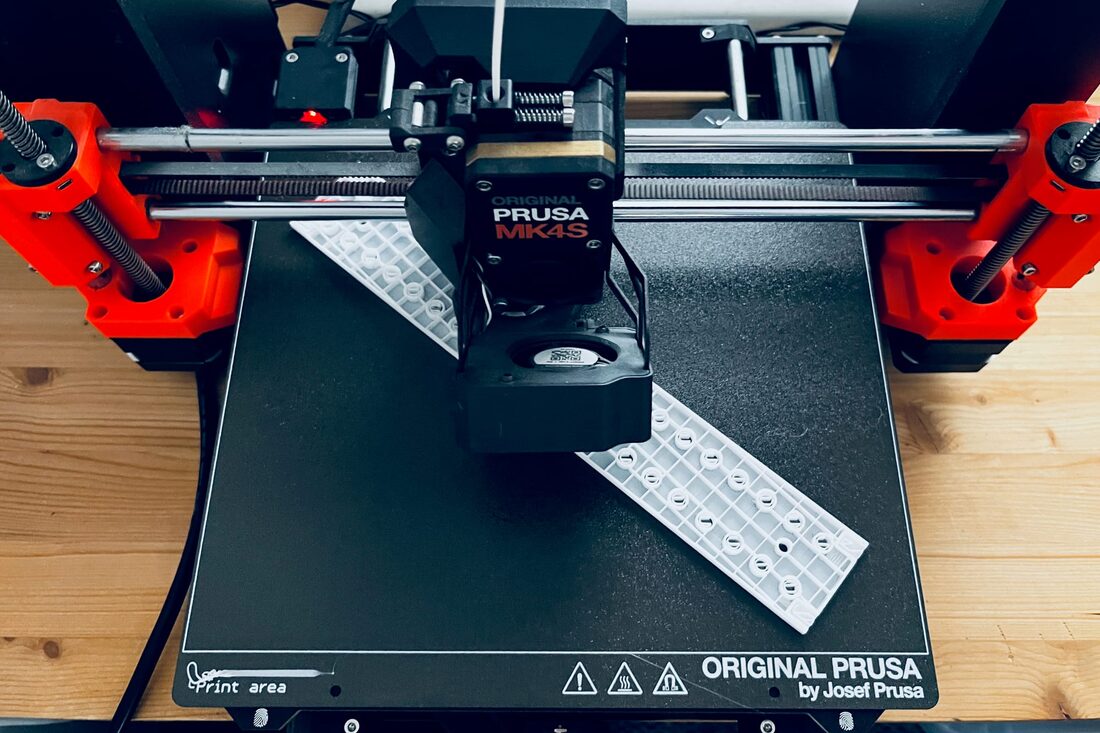
The outcome was concrete: component changes that reduced build cost and sourcing complexity, process changes that lowered the skill barrier, and a build guide rewritten to hold up for anyone, anywhere, with a soldering iron and determination.

Proof the whole idea actually works.

The Moduleur shipped its first completed DIY unit — built by someone with no prior relationship to the team, on the other side of the planet. That's not a milestone for the builder. It's proof of concept for the product.

The build guide now reflects real-world conditions, not ideal lab conditions. Component choices are more globally accessible and cost-effective. The assembly sequence is tighter. The path from "waitlist signup" to "working synth" is shorter and more reliable than it was before.

A 2,200-person waitlist is a strong signal. A product that converts that signal — repeatably, globally, without hand-holding — is what Shmøergh is now positioned to deliver.

"Matt's involvement feels like a real milestone for us. Not because he built the first unit, but because it proves the whole idea: someone on the other side of the planet with a soldering iron can actually create a Shmøergh synth and enjoy making noise with it."
Shmøergh Team  /  Hungary
2,200+
Waitlist signups
From a single MVP launch video
#1
First DIY unit built
Anywhere in the world — proof of concept
Build cost reduced
Custom steel panel & proprietary rails replaced with 3D-printable parts and FR4
Barrier to entry
Process changes made the build globally viable
What this demonstrates
Discovery through doing

The most reliable way to find what's broken in a product experience is to be the user. Reading a build guide and building from a build guide are completely different activities. Real friction only surfaces under real conditions.

Documentation is a product surface

For an open-source hardware product, the build guide is the UX. Ambiguous steps, missing context, and assumed knowledge are bugs — not oversights. Treating documentation with the same rigour as circuit design is what separates a prototype from a product.

Accessibility is a design decision

Every component that's hard to source globally, every step that requires specialist knowledge, every cost that prices someone out — these are product decisions with real user impact. Lowering the barrier to entry isn't a compromise. It's what makes the design philosophy real.

User Profile  /  Core Audience

The DIY Builder

Research method Build-along & community observation
Builder
The Curious
Builder
Global  ·  Community-First User
Profile
Technically curious, aesthetically driven, values openness and honesty in design
Community
Analog synth, modular, DIY electronics, open-source hardware
Skill level
Varies widely — beginner solderers to experienced engineers
Location
Global — parts sourcing, shipping, and documentation must hold up everywhere
Motivation
Build something real, understand how it works, make it their own
Key frustration
Build guides that assume knowledge, components impossible to source locally
"Someone on the other side of the planet with a soldering iron can actually create a Shmøergh synth and enjoy making noise with it."
Shmøergh Team  /  on the first completed DIY build

The Moduleur's waitlist didn't come from advertising. It came from a single piece of authentic content that found the right people. These are builders who've been burned before by products that promise openness and deliver complexity. They can read a schematic. They know what a BOM is. They're not looking to be sold to — they're looking to be trusted.

They watch, research, and commit before they buy. Community reputation travels fast in these circles — a bad build experience gets shared as readily as a good one. The build guide is read before a single component is ordered. Every ambiguous step is a potential dropout point, a forum complaint, or a negative signal to the next person considering the build.

  • Build guide steps that assumed prior electronics knowledge
  • Components specified that are regionally unavailable or expensive to source globally
  • Edge cases in circuit behaviour undocumented, surfaced only during actual builds
  • No guidance on substitutions — leaving builders to improvise alone
  • A build guide that assumes curiosity, not expertise
  • Component choices with global sourcing in mind
  • A sequenced assembly process optimised for clarity, not convenience
  • Documented edge cases and known circuit behaviours
  • Approved substitutions that preserve design integrity
Build anywhere
Components sourceable globally, not just locally
Reduce assumed knowledge
Guide written for the motivated beginner, not just the experienced builder
Lower the BOM cost
More people in, without compromising the design
Document the edge cases
Surface what only appears when you actually build the thing
Redesign the enclosure
Custom steel panel and proprietary rails replaced with 3D-printable parts and standard FR4
Prove the model
One completed build by a stranger proves every build that follows is possible
🔧
DIY Hardware
Hands-on, self-directed, high investment
📡
Open Source
Transparency as a feature, not a footnote
🌏
Global Reach
Build guide must hold up anywhere
🎛
Analog Community
Reputation-driven, community-first market